
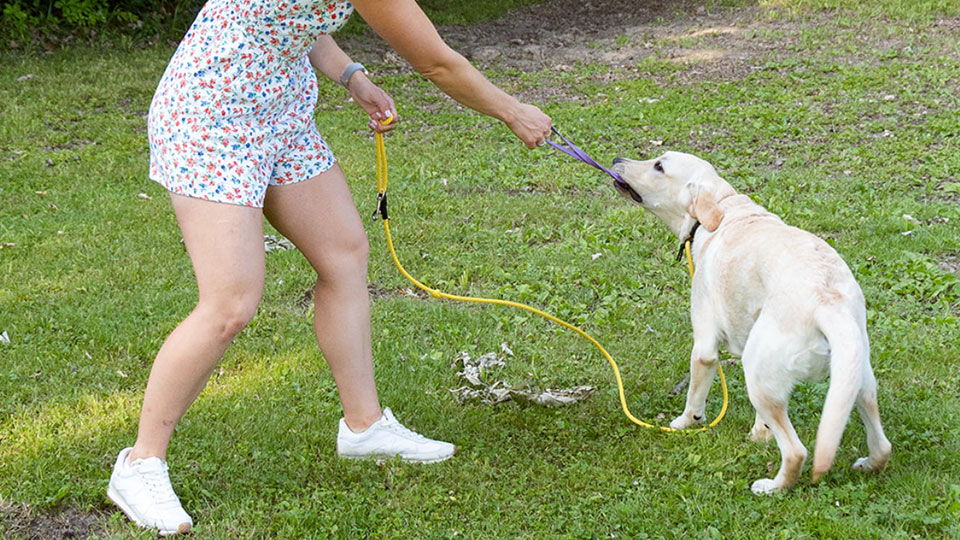
Playtime is supposed to be fun, right?
But for many dog owners, it turns into a chaotic mess—jumping, barking, tugging on clothes, running wild with zero recall.
Sound familiar?
Here’s the thing: play isn’t the problem.
The lack of structure is.
Victoria teaches that structured play isn’t just a fun outlet—it’s one of the most effective ways to build obedience, focus, and trust between you and your dog.
Let’s dive into how play—with just a little structure—can help transform your dog’s behavior.
🧠 Why Chaos in Play Leads to Chaos Everywhere
When your dog learns that excitement = freedom = no rules, they carry that mindset into every part of life:
- Jumping on guests
- Ignoring recall
- Not knowing when to calm down
- Getting overstimulated around other dogs or kids
But with structured play, you teach your dog:
- Boundaries matter—even when things are exciting
- Listening earns more fun
- Calmness gets rewarded
- You are still the leader—even during play
This simple shift can change everything.
🐾 What Is Structured Play?
Structured play is more than tossing a ball or tugging a toy—it’s a purposeful training session disguised as fun.
Victoria uses games like fetch and tug to teach:
- 🚦 Impulse control (“wait” before chasing, “drop it” on cue)
- 🎯 Focus under excitement
- 🧠 Following cues like “come,” “place,” and “out”
- 🧘 Settling down after high energy
When play has clear rules, your dog starts listening better in every area of life.
🎮 Fetch & Tug: Two Games With Huge Potential
Here’s how Victoria structures play:
🔁 Fetch
- Calm start—“sit” and “wait” before the toy is thrown
- Release on cue—“get it” after calm eye contact
- Reinforce recall—use leash guidance if needed
- Practice “drop it”—no tug-of-war over the toy
🧸 Tug
- Start only when your dog is respectful
- Interrupt the game to ask for a “drop it”
- Reward calmness before starting again
- End the game on a positive note
These aren’t just games. They’re leadership lessons in disguise.
🐕 Structured Play Builds Obedience In Real Life
When your dog practices self-control during high energy play, they’re more likely to:
- Stay calm when guests come over
- Listen on walks, even around distractions
- Respond to commands in excited environments
- Avoid destructive, hyperactive behavior at home
Play becomes training. Training becomes second nature.
🧩 Troubleshooting: What If My Dog Gets Too Excited?
Victoria recommends:
- Short sessions (10–15 minutes)
- Always starting and ending in calmness
- Using a leash if needed for extra control
- Pausing the game if your dog becomes too intense
- Redirecting back to focus, then restarting
The goal isn’t to eliminate fun—it’s to build habits that stick when it matters.
🎓 Ready to Make Playtime Purposeful?
Inside the FTH Online Pack, Victoria teaches exactly how to create structured, engaging play sessions that build real-world obedience:
- 🎥 Video tutorials on fetch, tug, and troubleshooting
- 📘 A full Structured Play eBook
- 🐾 How to turn play into impulse control training
- 💬 Weekly live support to ask questions and share wins
- 👥 A community of dog owners who play with purpose
All for just $10 for your first month.
👉 Join here and turn playtime into progress.